Alphabet beats estimates as Google doubles down on AI-powered Search ads

Alphabet beat Wall Street’s quarterly expectations, but for search advertisers the bigger story was Google’s growing confidence in AI Max and AI-powered Search. During its earnings call, executives said AI Max is now unlocking “billions” of searches that previously couldn’t be monetized, marking one of Google’s clearest statements yet about how AI is expanding the future of search advertising.
The comments suggest Google sees AI not just as a performance enhancer, but as a way to create entirely new advertising inventory.
What’s new. During the earnings call, Google’s Chief Business Officer Philipp Schindler said AI Max is helping the company monetize searches that were previously too complex or ambiguous for traditional keyword-based advertising.
According to Google:
- AI Max is now out of beta.
- More than 500,000 advertisers have adopted the feature.
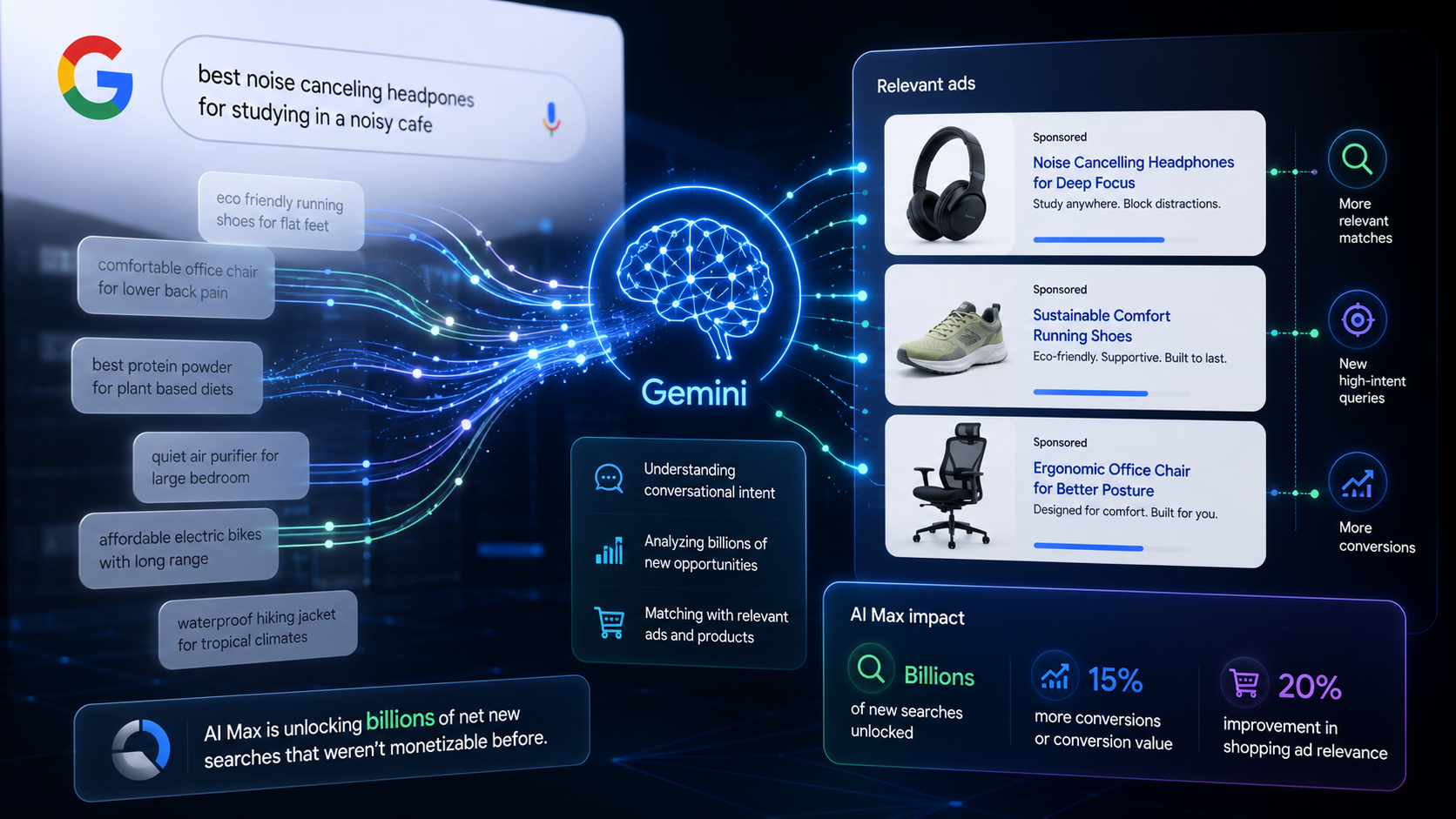
- Advertisers using AI Max or Performance Max see an average 15% increase in conversions or conversion value at a similar return on ad spend (ROAS).
- Gemini has improved the relevance of Shopping ads for complex queries by roughly 20%.
- AI Max is unlocking “billions” of net new searches that previously weren’t monetizable.
Google said Gemini’s ability to understand longer, conversational search queries enables it to better interpret commercial intent and match those searches with relevant ads.
Why we care. This may be one of the most significant strategic updates Google has shared about the future of paid search. Rather than simply improving campaign optimization, Google is saying AI is expanding the total addressable market for Search ads by creating inventory that didn’t previously exist. That means advertisers could gain access to additional qualified traffic without relying solely on traditional keyword demand.
At the same time, campaign targeting becomes increasingly dependent on Google’s AI models, giving advertisers less visibility into exactly how queries are matched.
Between the lines. Google’s comments reinforce a broader shift away from keyword-first advertising toward intent-first advertising. As Gemini becomes responsible for interpreting increasingly complex and conversational searches, advertiser success may depend less on exhaustive keyword lists and more on providing strong creative assets, product data, and landing pages that Google’s AI can confidently match to user intent.
The update also further positions AI Max as Google’s preferred mechanism for capturing demand beyond conventional keyword targeting.
Also announced. Google provided new details on how it plans to monetize AI-powered Search experiences.
The company is testing Highlighted Answers, a new AI Mode ad format that inserts clearly labeled sponsored links directly within AI-generated list responses. Google said the experience is already showing early user traction.
Executives also highlighted additional AI Mode ad experiences, including contextual sitelinks generated from conversations and Direct Offers, which surface promotions during planning journeys. IHG Hotels & Resorts was named as an upcoming partner for the Direct Offers experience.
Together, the announcements paint a clearer picture of how Google intends to weave advertising into conversational search experiences while maintaining commercial relevance.
Bottom line. Alphabet’s earnings beat grabbed investor attention, but Google’s AI advertising announcements may have longer-term implications for marketers. The company is betting that Gemini can expand searchable commercial intent beyond keywords, opening billions of new monetizable searches while fundamentally reshaping how Search ads are matched and delivered.
